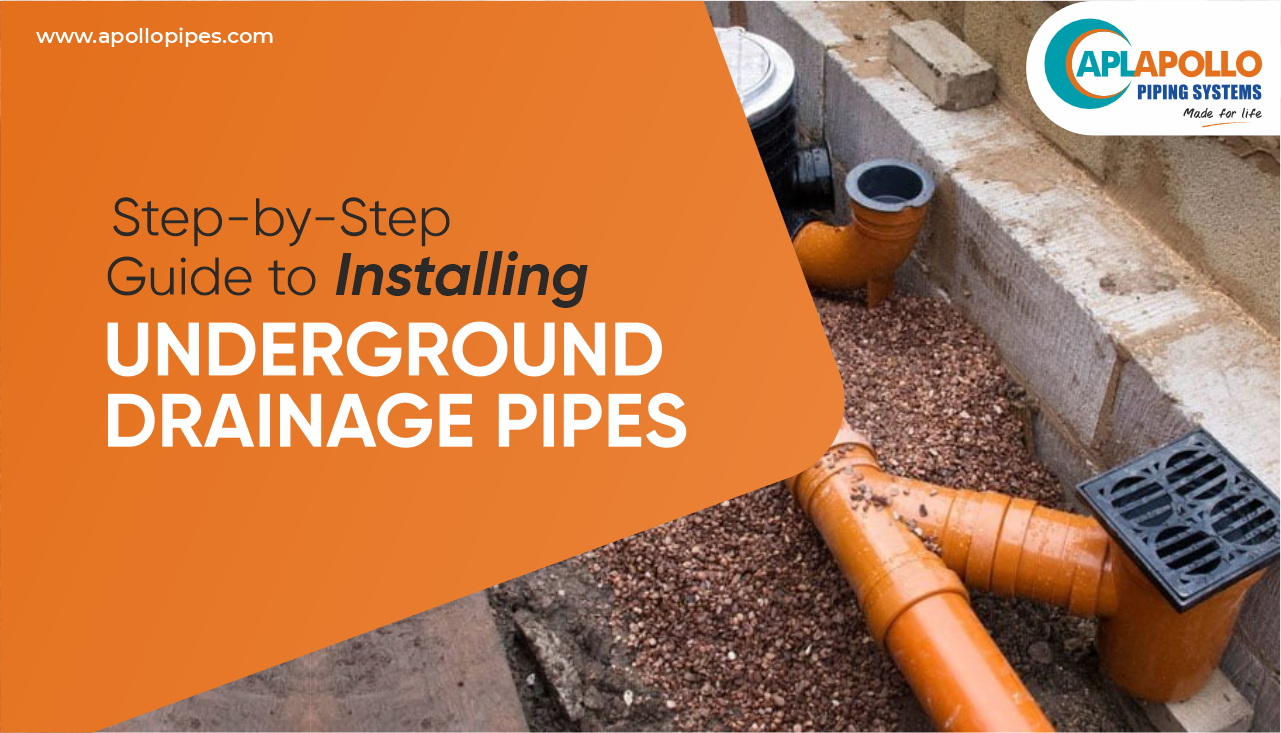
Installing underground drainage pipes is a very important aspect of modern construction, ensuring the safe and efficient management of waste and stormwater. A well-planned and correctly installed drainage system helps prevent waterlogging, soil erosion, and structural damage to foundations, thereby supporting the long-term durability of buildings and landscapes. It also enhances sanitation and reduces the risk of environmental hazards. To achieve reliable performance, it’s important to follow a systematic and precise installation process, using quality materials and proper techniques.
Here is the guide that outlines the correct method for installing underground drainage pipes effectively, ensuring long-term efficiency and safety of the system.
Planning and Design
First, it is important to design a layout for your underground drainage pipes. Start by mapping out the areas where water needs to be collected and drained. Identify the source points (like kitchen waste outlets, bathroom drains, or rainwater downspouts) and determine the final disposal area such as a sewer line, soak pit, or stormwater drain.
To ensure proper slope use suitable pipe diameters based on the volume of water, ensure to comply with local building codes and its regulations.
Site Preparation
After finalizing the layout, clearly mark the trench lines on the ground, ensuring they avoid existing utility lines such as electric cables or gas pipelines. Carefully excavate the trenches to the required depth and width as per the drainage plan. It is crucial to maintain a consistent gradient throughout the trench to facilitate smooth water flow. To achieve this, use tools like a laser level or a string line for accurate slope measurement. Proper site preparation sets the foundation for efficient and long-lasting underground drainage pipe installation.
Trench Bedding
The bedding layer plays a vital role in providing a stable and secure base for underground drainage pipes. It cushions the pipes and evenly distributes external loads, helping to prevent bending, cracking, or deformation over time. Begin by laying a 100mm to 150mm thick layer of compacted sand or fine gravel at the bottom of the trench. This material should be smooth, well-compacted, and free from sharp stones or debris that could harm the pipe. A properly prepared bedding ensures durability and extends the life of the drainage system.
Laying the Pipes
Carefully lay the underground drainage pipes along the prepared trench, starting from the outlet (lowest point) and moving toward the inlet. Join pipe sections securely using solvent cement or rubber ring fittings depending on the type of pipe. Align each pipe correctly to maintain the slope and avoid reverse gradients, use inspection chambers or manholes at regular intervals for easy maintenance.
Pipe Surround and Backfilling
Once the underground drainage pipes are laid and inspected, you may surround them with selected granular material for safety. After it, cover the pipe with sand from all sides. Compact the surrounding material lightly to avoid pipe displacement. Backfill the trench with excavated soil in layers, compacting each layer gently to avoid damaging the pipes. Leave room for settling, especially in areas that will be paved or driven over.
Final Inspection and Testing
Before completing the backfill, conduct a water test to ensure there are no leaks and that water flows properly through the system. For checking it, flush water through the system from the highest point, check all joints and connections for leaks or blockages. Inspect all access chambers and make sure covers are properly fitted.
Restoration
After completing the installation of underground drainage pipes, restore the surface to its original state. Depending on the area, this may involve repaving driveways, replanting grass, or completing landscaping work. Proper restoration ensures aesthetic appeal, safety, and functionality, while also preventing surface erosion and maintaining the integrity of the installed drainage system.
APL Apollo Underground Drainage Pipes
APL Apollo’s underground drainage pipes are very rigid and unplasticized. Excellent surface strength, and high compressive rating are their prominent features, these pipes are best for underground drainage and sewerage systems. They are very useful for conveying surface water and potable water and widely used in both industrial and residential areas, these PVC-U pipes serve efficiently in internal and external discharge piping applications. Their durability, chemical resistance, and long service life make them a reliable choice for a range of infrastructure and construction needs in various environmental conditions.